Logan Jenkins · 11 September 2026
Cornish Language Renaissance Drives Fresh University Strategies in Coastal Tradition Documentation
Researchers across several institutions have begun integrating Cornish language materials into studies of coastal heritage, and this shift has produced new frameworks for archiving maritime customs that extend beyond traditional English-language records. The revival of Cornish, which gained official recognition in the early twenty-first century, supplies vocabulary and narratives tied directly to fishing communities, tidal patterns, and seasonal seafaring practices that English sources often overlook.
Expanding Documentation Methods
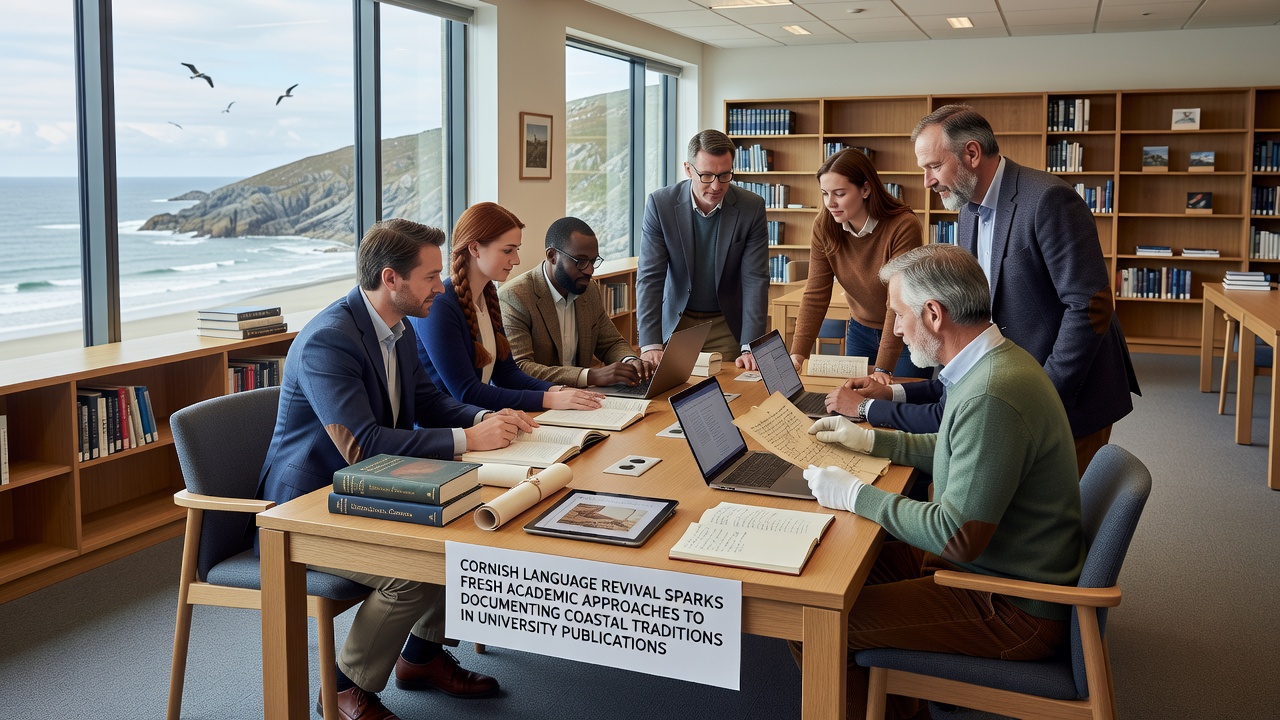
University teams now combine linguistic analysis with ethnographic fieldwork, and they collect oral histories in Cornish while cross-referencing them against nineteenth-century logbooks and parish registers. This approach reveals details about boat-building techniques and storm-warning systems that coastal families maintained for generations. Data from recent fieldwork shows increased use of Cornish terms for specific currents and weather signs, while English equivalents remain more general.
Digital platforms developed at several universities allow simultaneous tagging of audio recordings, place-name maps, and material artefacts, and these tools let scholars trace how language encodes knowledge of safe harbours or seasonal fish migrations. One study released last year demonstrated that bilingual archives capture a wider range of seasonal indicators than monolingual collections alone.
September 2026 Symposium and Forthcoming Publications
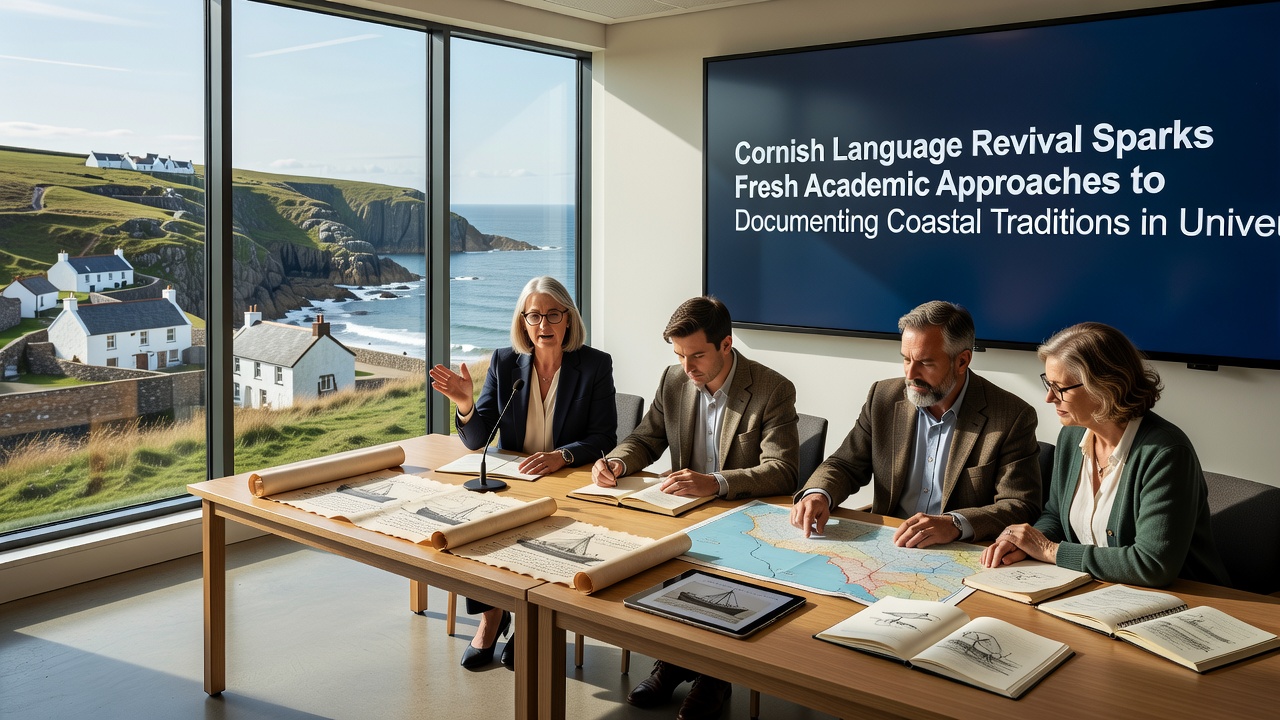
A major symposium scheduled for September 2026 at a southwest England university will present findings from multi-year projects that link Cornish texts to physical coastal sites. Organisers expect contributions on topics ranging from seaweed harvesting terminology to navigation rhymes passed down in fishing families. Preliminary abstracts indicate that several papers will introduce open-access datasets pairing Cornish phrases with geolocated photographs of traditional landing places.
Editors at two university presses have already commissioned special issues that will appear in late 2026 and early 2027, and these volumes will feature side-by-side Cornish and English transcriptions accompanied by GIS overlays of coastal landmarks. Such publications mark a departure from earlier anthologies that treated language and material culture as separate domains.
Interdisciplinary Collaborations
Historians, linguists, and marine scientists now share research protocols, and joint teams visit harbours to record both spoken Cornish descriptions of tides and quantitative measurements of the same phenomena. This method has produced glossaries that pair traditional terms with modern oceanographic data, and several departments plan to release these resources under Creative Commons licences.
Observers note that the process also draws on models developed in other Celtic-language contexts, including work coordinated through University of Edinburgh Celtic studies programmes. Parallel efforts in Ireland have supplied templates for community-led transcription projects that universities in Cornwall have adapted to local needs.
Challenges in Archival Integration
Funding remains uneven across projects, yet partnerships with regional heritage bodies have supplied equipment for high-quality audio capture and transcription software. Training sessions held at three universities last winter equipped postgraduate researchers with skills to handle dialect variation and orthographic differences that exist within revived Cornish. These sessions also addressed ethical questions around consent when recording knowledge that fishing families regard as proprietary.
Library catalogues are being updated to include Cornish-language subject headings for coastal topics, and this change improves discoverability for scholars who previously searched only English terms. Early statistics from one pilot catalogue show a measurable rise in retrievals of previously underused manuscripts.
Future Directions
Plans for 2027 include a cross-institutional database that will accept contributions from independent researchers and community groups, and project leads have circulated draft metadata standards that accommodate both linguistic and material-culture fields. Workshops scheduled for the coming academic year will test these standards against sample collections of boat names, net-mending songs, and weather proverbs.
Additional links have been established with University College London digital humanities teams to explore automated alignment of Cornish audio with historical maps. The resulting tools are expected to accelerate the processing of existing recordings while maintaining accuracy in dialect identification.
Conclusion
The integration of revived Cornish into university documentation of coastal traditions continues to generate new datasets, collaborative protocols, and publication formats. Events planned for September 2026 and the subsequent release of themed journal issues will provide further evidence of how language revival shapes research practices. These developments rest on sustained partnerships between academic departments, regional archives, and coastal communities that maintain the living connection between words and the sea.