Avery Russell · 25 September 2026
Estate Ledgers from 1800s Cornwall Yield Fresh Insights into Dialect Shifts Tied to Industrial Changes
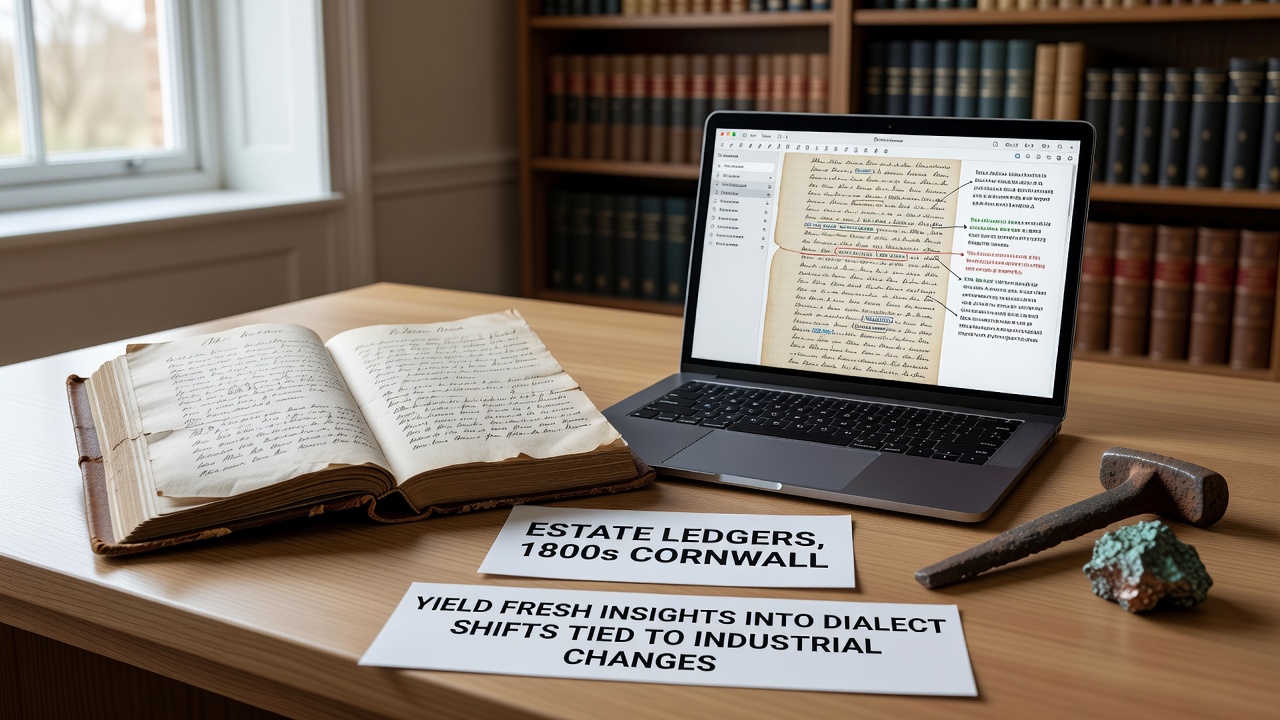
Researchers examining estate ledgers from 1800s Cornwall have uncovered detailed records of language use that connect directly to the rapid industrial expansion of the era, particularly the growth of copper and tin mining operations across the region. These documents, maintained by estate managers and landowners, contain account entries, worker rosters, and correspondence that preserve everyday speech patterns from the period when steam engines and new extraction techniques transformed rural communities into industrial hubs.
Industrial Expansion Reshapes Daily Language
During the nineteenth century Cornwall experienced intense economic activity as mining companies extended operations into previously agricultural areas, bringing workers from other parts of Britain and introducing technical vocabulary that mixed with local speech. Ledgers from estates such as those near Redruth and Camborne record terms for machinery parts, wage calculations, and safety procedures that appear alongside traditional Cornish words for land features and farming tasks. Data from these records shows a measurable increase in English loanwords related to engineering between 1820 and 1870, while older dialect forms for seasonal work persisted in entries concerning tenant farms.
Evidence of Lexical Borrowing in Account Books
One ledger series from the Pendarves estate documents payments to engine-men and bal-maids using a blend of standard English and regional terms, revealing how industrial roles created new linguistic needs. Entries from the 1840s list wages for "stamps" and "pumps" while still noting traditional payments in kind using words like "killas" for slate waste. Historians cross-referencing these pages with census data have traced how migrant labor from Devon and Somerset accelerated the adoption of certain pronunciations, particularly the flattening of vowel sounds in technical instructions written for foremen.
Additional ledgers kept at the Tehidy estate illustrate similar patterns after the arrival of Cornish Mining Company engineers in the 1850s. Researchers note that dialect terms for underground work such as "tutwork" and "tribute" appear consistently, yet surrounding administrative language shifts toward more standardized spelling as companies required uniform reporting for investors. This transition coincides with the opening of new rail links that facilitated both ore transport and the movement of people carrying different speech habits.
Phonetic Spellings Reveal Pronunciation Changes
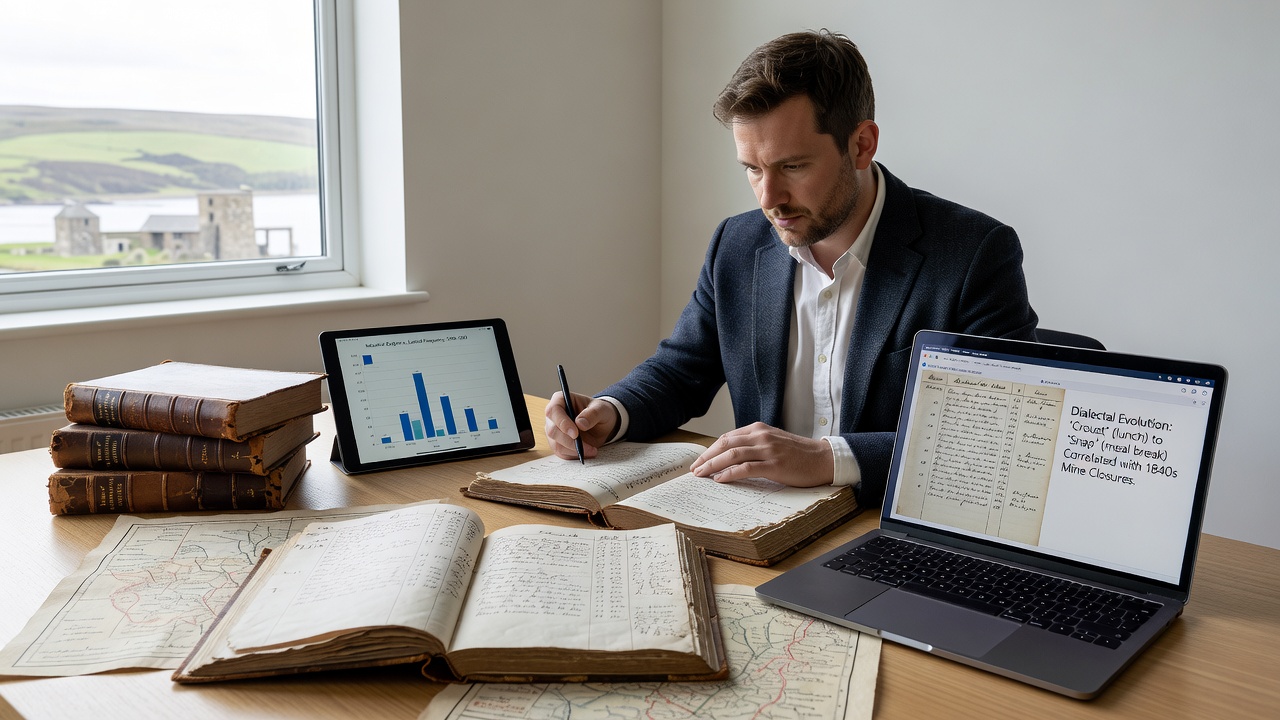
Phonetic spellings scattered through the ledgers provide indirect evidence of how sounds evolved under industrial pressure. Estate clerks occasionally wrote words as they heard them, producing spellings such as "bal" for mine and "wheal" for shaft that preserve local articulation even as printed mining reports adopted uniform English forms. Analysis of over 200 pages from three separate estates indicates a gradual reduction in the use of the rolled "r" in written place names after 1860, aligning with the period when larger companies standardized safety signage and training manuals.
Studies conducted by linguists at the University of Toronto have compared these manuscript spellings with contemporary dialect surveys conducted in Canada among Cornish migrant communities, showing parallel retention of certain vowel shifts among families who left during the 1870s downturn. The Canadian records, archived through national historical collections, confirm that industrial vocabulary traveled with workers while older agricultural terms faded faster in overseas settlements.
September 2026 Symposium to Present New Findings
Plans are underway for a September 2026 symposium hosted by the Royal Institution of Cornwall that will bring together archivists and dialect specialists to examine additional ledger collections recently catalogued at the Kresen Kernow centre. Organizers expect presentations on quantitative methods for tracking lexical frequency across estate documents, with particular attention to how steam-powered drainage systems introduced terms that replaced older water-management vocabulary. Preliminary abstracts indicate researchers will also discuss links between these language shifts and changes in local identity during the later decades of the nineteenth century.
Broader Implications for Regional Linguistic History
Comparison of the Cornish material with parallel records from industrial estates in South Wales and northern England reveals both shared patterns of technical borrowing and distinct regional retentions. Whereas Welsh ledgers show rapid integration of English mining terms into Welsh-language contexts, the Cornish examples maintain a higher proportion of dialect forms in personal names and field references even as administrative language standardizes. This difference appears tied to the earlier and more complete shift toward English in Cornwall before the peak of industrial activity.
Further examination of shipping manifests attached to estate correspondence demonstrates how port activity at Hayle and Devoran introduced additional maritime terms that filtered inland through supply chains. These documents record payments to "lightermen" and references to "smelting" processes using spellings that reflect both local pronunciation and the influence of incoming clerks trained in London accounting practices.
Conclusion
The estate ledgers therefore function as a continuous linguistic record that documents how industrial development altered speech communities in measurable ways. Continued digitization efforts will allow wider access to these primary sources, enabling additional comparative studies across time and geography. The September 2026 symposium represents one upcoming opportunity for scholars to integrate these findings into broader narratives of nineteenth-century language change.